



Can You Connect Switching Power Supplies in Parallel? A Practical Guide
Date:2026-10-24 01:54:01 Visit:60
Introduction
When an industrial application requires more DC output current than a single switching power supply can provide, connecting multiple power supplies in parallel may be an option.
Parallel operation can help increase the available output capacity, support high-current loads, and provide a flexible power solution for industrial equipment. However, not every switching power supply is designed for parallel operation. Connecting two units together without checking their specifications can lead to uneven current distribution, overload, unstable operation, or equipment damage.
So, can you connect switching power supplies in parallel?
Yes—but only when the power supplies and the application are suitable for this configuration. This guide explains the main considerations, common mistakes, and how to select a power supply for parallel operation.
1.Connect Switching Power Supplies in Parallel?
Parallel operation connects the positive outputs together and the negative outputs together to supply a common DC load. The power supplies operate at the same nominal output voltage.
There are two common reasons to consider this configuration.
Increase available output current
Some equipment requires more current than one power supply can deliver. If compatible power supplies support parallel operation, multiple units may be used to provide a higher combined output current.
For example, two compatible 24 V, 20 A power supplies have a combined nominal rating of 24 V and 40 A when their current contributions can be properly coordinated.
This is an illustrative calculation, not a guarantee that any two 24 V, 20 A supplies can safely operate in parallel. The actual usable capacity depends on the manufacturer's specifications, load conditions, temperature, wiring, and current-sharing performance.
2. How Does Parallel Operation Work?
In a parallel configuration, compatible power supplies feed the same DC bus.
The output voltage remains at the system's intended nominal level, while the total load current is supplied by the connected units.
For example, a 24 V DC system may use two compatible power supplies to serve a load that requires more current than one unit can provide.
However, the current does not automatically divide equally between the supplies.
If one unit has a slightly higher output voltage or a different control response, it may deliver more current than the other. This can cause one power supply to reach its current limit or operate at an excessive temperature while the other remains underutilized.
For this reason, parallel operation requires more than connecting output terminals together.
The power supplies must be suitable for parallel use, and the installation must follow their technical documentation.
3. Why Is Current Sharing Important?
Current sharing describes how the total load current is distributed among parallel power supplies.
Ideally, compatible units share the load within the limits specified by the manufacturer. In practice, the distribution depends on output-voltage settings, internal control circuits, wiring resistance, operating temperature, and the load.
Poor current sharing can cause several problems:
-
One power supply carries a disproportionate share of the load.
-
The more heavily loaded unit may enter current limiting or overload protection.
-
Output voltage may become unstable under changing load conditions.
-
The system may deliver less usable current than expected.
-
The operating temperature of one unit may rise excessively.
What is active current sharing?
Active current-sharing systems use a control mechanism to coordinate the output current of multiple power supplies.
Some power supplies use dedicated current-sharing signals or control connections. Other designs use different methods, and some power supplies are not intended for parallel operation at all.
Do not assume that a product supports active current sharing simply because its product page states that it supports parallel operation. Check the relevant model's datasheet or wiring instructions for the supported configuration and connection method.
4. Can You Connect Any Two Switching Power Supplies in Parallel?
No. Matching the output voltage is necessary, but it is not sufficient.
Before connecting power supplies in parallel, check the following.
1. Manufacturer approval
Confirm that the manufacturer explicitly supports parallel operation for the specific model.
A power supply designed for standalone use may not regulate correctly when connected to another unit. Follow the manufacturer's instructions rather than assuming that two identical-looking units are compatible.
2. Output voltage compatibility
The units must be configured for the same intended output voltage, within the manufacturer's permitted tolerances and adjustment instructions.
A voltage mismatch can cause one unit to carry more current than another.
3. Current-sharing method
Check whether the units require a current-sharing connection, a designated parallel terminal, or another specific configuration.
Do not connect control or sensing terminals based on assumptions. Follow the wiring diagram for the exact model.
4. Reverse-current protection
When multiple outputs are connected, current may flow in an unintended direction under certain fault or operating conditions if the design does not prevent it.
Some systems use ORing diodes or MOSFET-based ORing circuits to isolate power sources. However, ORing and current sharing serve different purposes: ORing can help prevent reverse current, but it does not necessarily ensure equal load sharing.
Use only a protection arrangement compatible with the power supply and the application's requirements.
5. Load, temperature, and installation conditions
Verify the permitted operating temperature, ventilation requirements, output derating, and maximum load.
Even when the electrical configuration is supported, the total usable output capacity may be lower than the sum of the individual nameplate ratings under certain conditions.
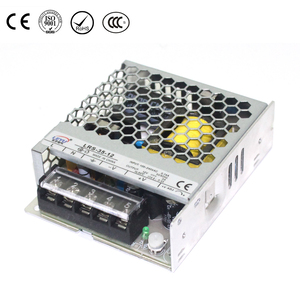
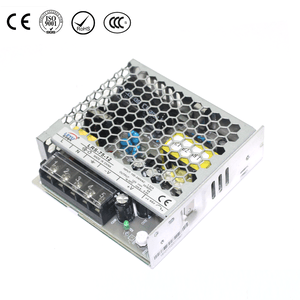
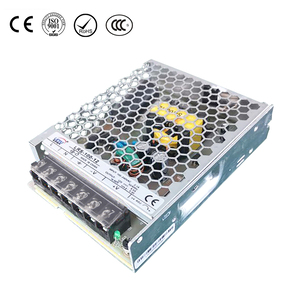
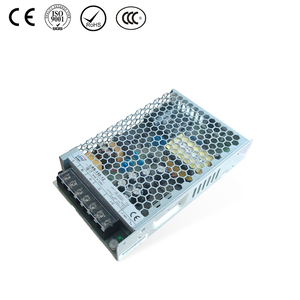
LEYU SCN Series Switching Power Supplies
For applications requiring high DC output current, the LEYU SCN series is one product family worth evaluating.
Looking for a high-power switching power supply for your equipment? Explore the LEYU switching power supply range or contact the LEYU team with your required output voltage, current, and application details.
