
-134213.jpg)
How to choose the right inverter
Date:2026-08-22 09:15:10 Visit:241
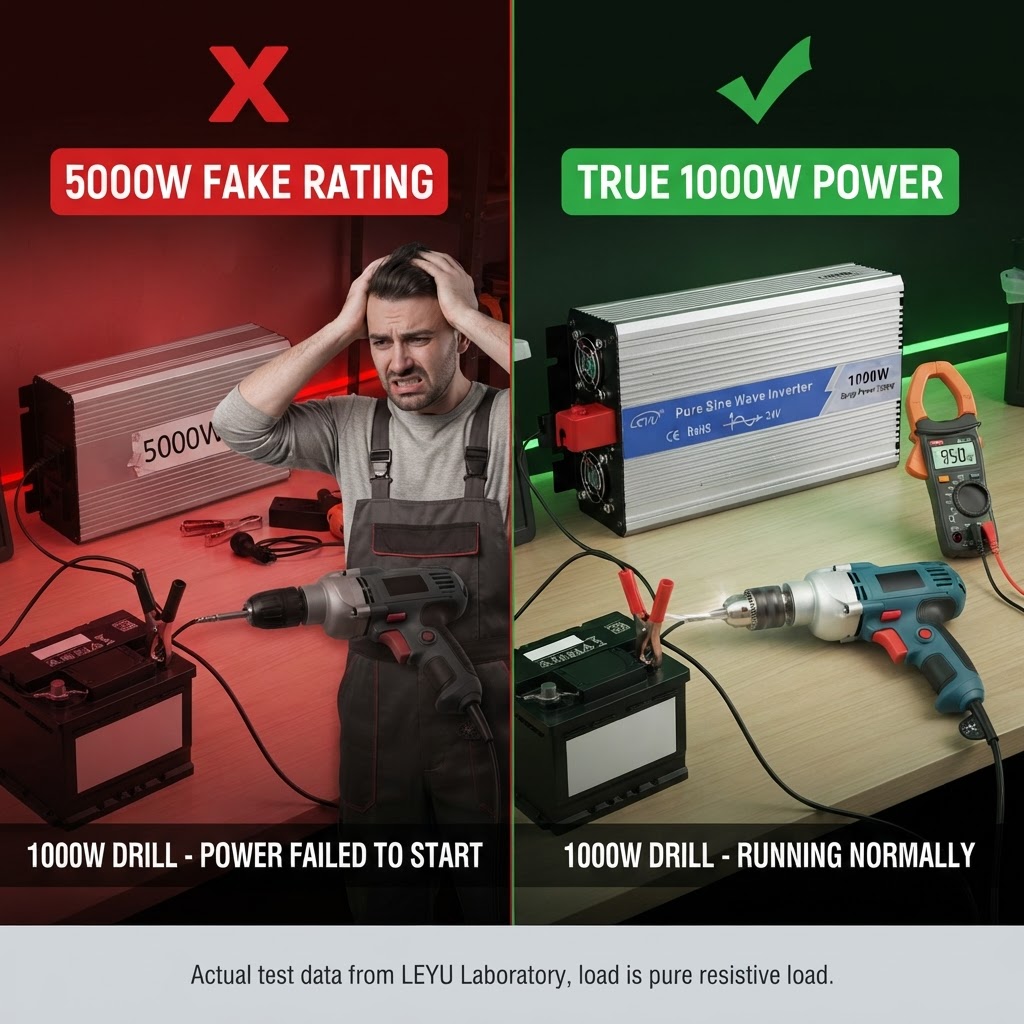
Have you ever bought an inverter rated at 3000W, only to find it couldn't even power a 1000W electric drill? It might have triggered an alarm, shut down, or even burned out the moment you turned it on.
This is the most common trap in the inverter market: inflated power ratings.
To grab attention, many sellers market "peak power" as "rated power" or simply exaggerate the specifications. Users often discover—only after purchase—that the actual usable power is far lower than advertised; at best, the equipment fails to start, while at worst, it damages appliances and creates safety hazards.
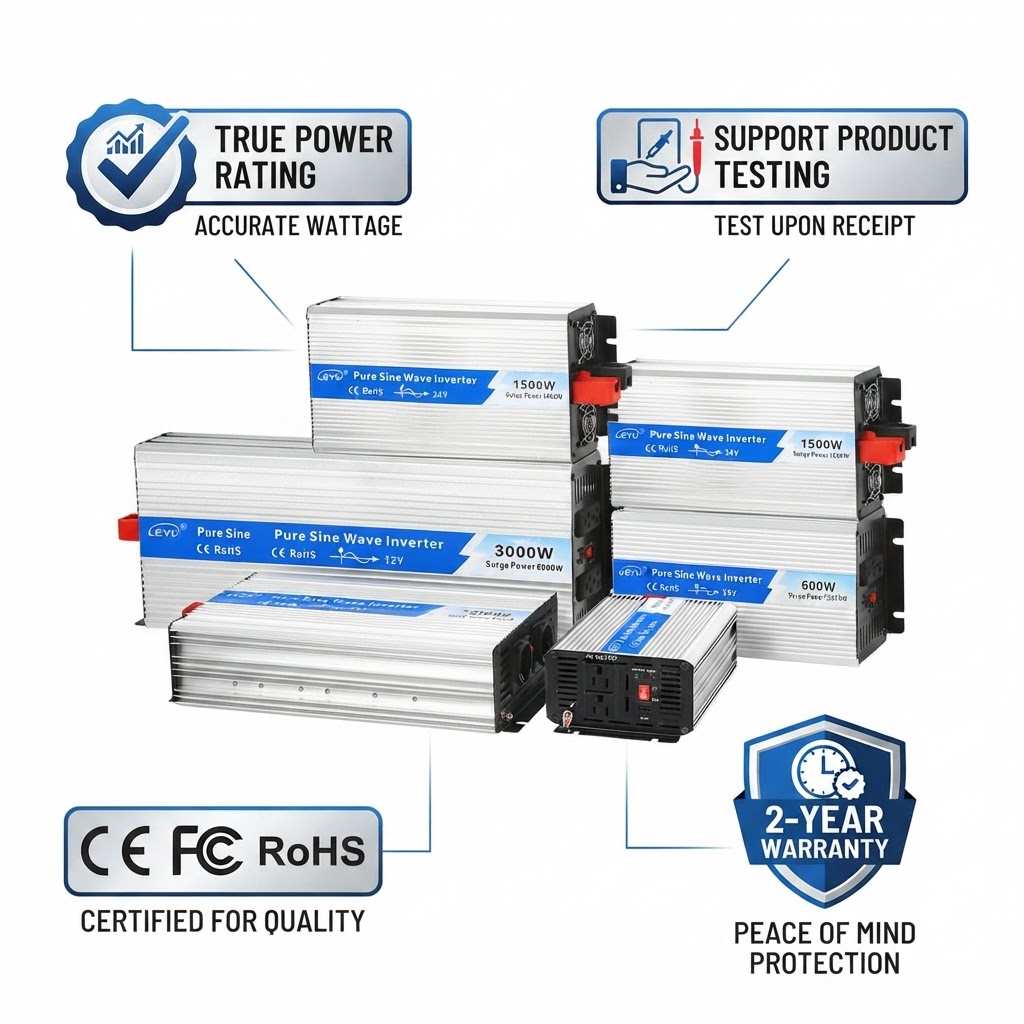
So, how should you choose an inverter? Today, Leyu offers a reliable buying guide backed by a rock-solid promise: no inflated power ratings.
1. Distinguish between "Rated Power" and "Peak Power"
When choosing an inverter, the first thing to look at isn't the largest number in the advertisement, but the rated power.
Rated Power: The power output an inverter can sustain stably over a long period. This is the power you can actually utilize.
Peak Power: The maximum surge power an inverter can handle for a very short duration (usually a few seconds); this is primarily used to start inductive loads such as motors and compressors.
Many products with inflated specifications list peak power as rated power, or simply exaggerate the figures. For instance, a unit with an actual rated power of only 500W might be labeled as 2000W; consequently, the user finds it unable to even power an 800W rice cooker.
Leyu takes a straightforward approach: rated power represents the actual, sustainable power output, while peak power is listed separately with its duration clearly specified.
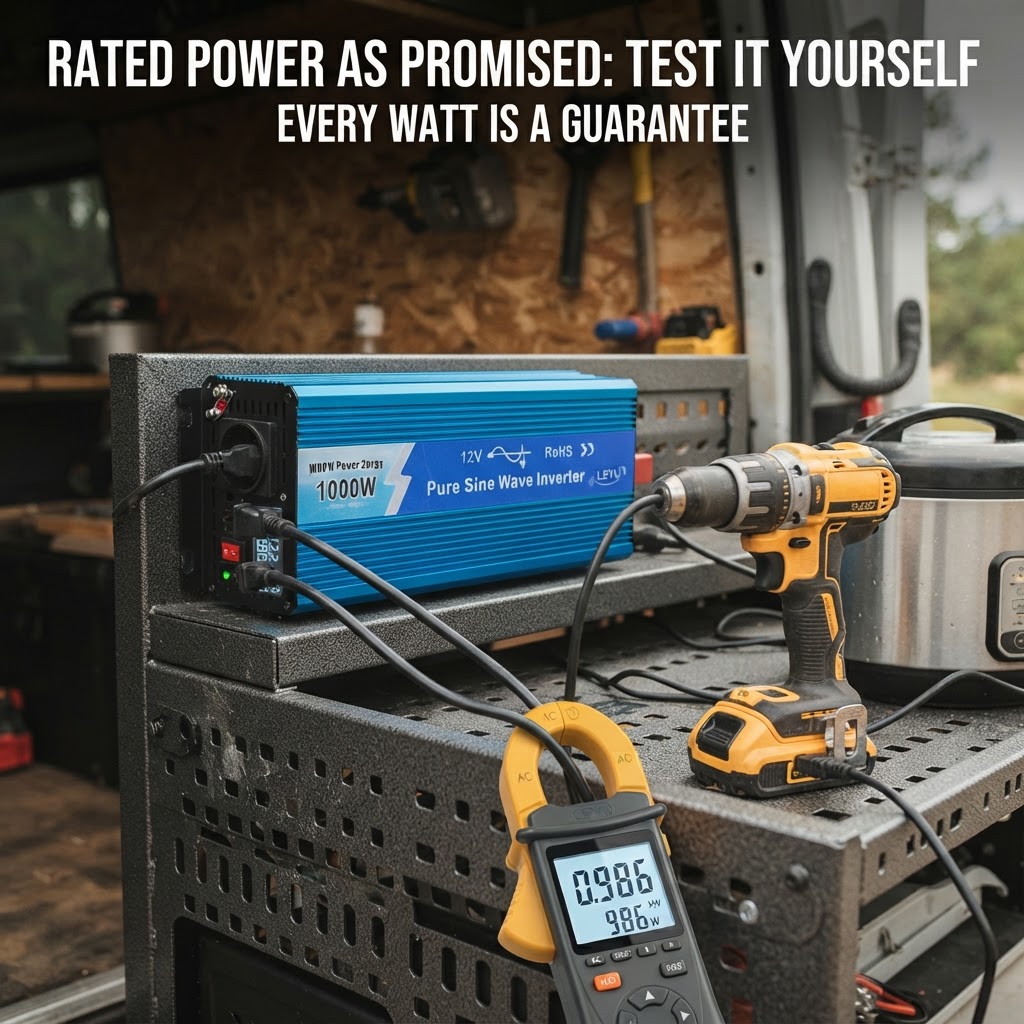
Take the Leyu 1000W inverter, for example: it has a rated power of 1000W and is tested to sustain a 1000W resistive load over the long term; its peak power is 2000W, sustainable for 3 seconds, specifically designed to handle the current surge when equipment starts up. No playing with words—every single watt is clearly and honestly stated.
II. Check the Waveform: Only Pure Sine Wave Is Safe
Inverter output waveforms fall into two categories: modified sine wave and pure sine wave.
Modified sine wave: Low cost, but poor waveform quality; when powering inductive loads (such as motors or compressors), it tends to cause overheating and noise, and may even damage precision equipment.
Pure sine wave: The output waveform matches that of mains electricity, offering superior compatibility and safe operation for virtually all electrical appliances.
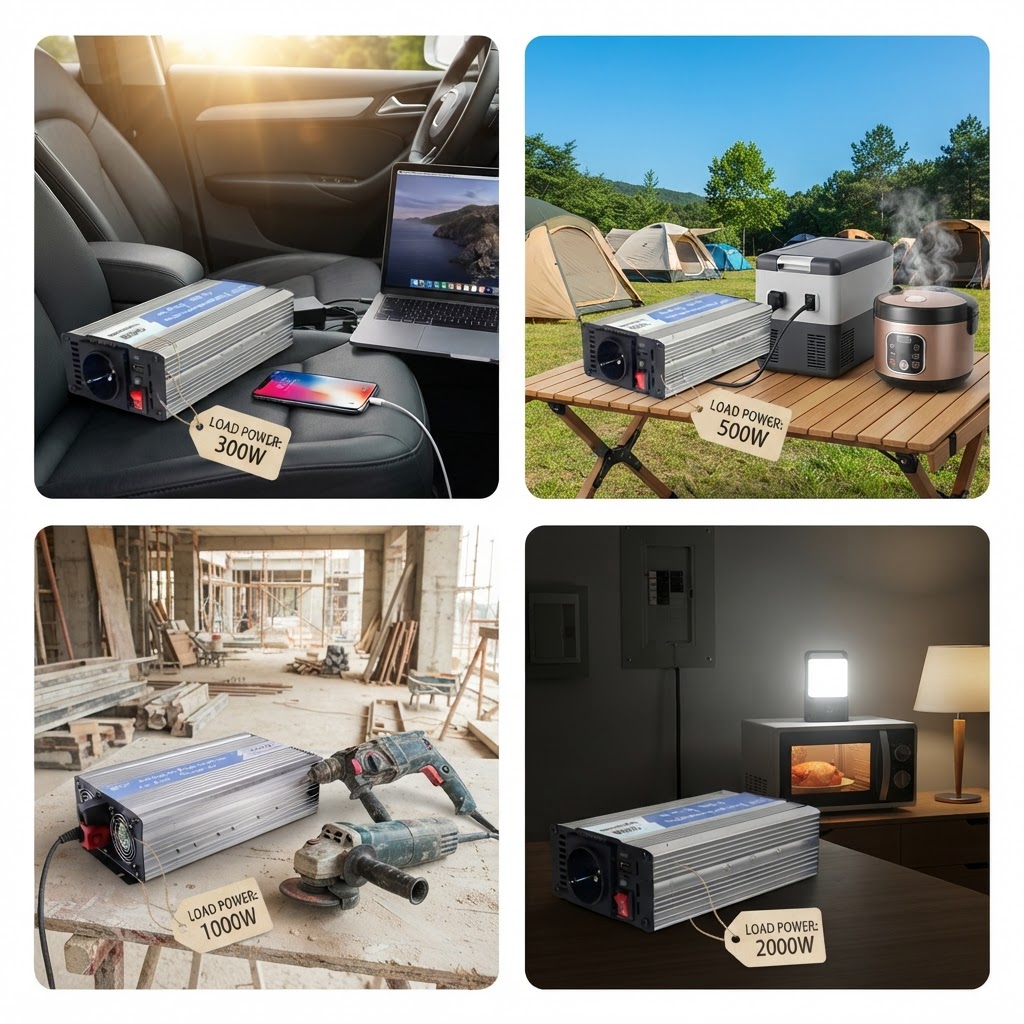
Leyu’s entire product line features pure sine wave output with a total harmonic distortion (THD) of less than 3%. Whether powering mobile phones, laptops, and car refrigerators, or electric drills, angle grinders, and microwave ovens, they ensure stable operation without damaging the equipment.
3. Performance Under Sustained Full Load
Products with inflated specifications share a common flaw: they may appear normal during short periods of no-load operation, but once running at full load for a few minutes, severe heat buildup causes them to automatically throttle power, trigger alarms, or even shut down.
This explains why many users report that an inverter rated at 1000W might handle an 800W load initially but fail after a short time.
Leyu eliminates this issue through superior design and component selection:
High-capacity transformers and all-copper inductors ensure ample power headroom;
Thickened aluminum alloy housing provides a large surface area for heat dissipation;
Intelligent temperature-controlled fans automatically adjust speed based on operating temperature;
Every unit undergoes a 30-minute full-load burn-in test before leaving the factory to ensure stability.
Even in high-temperature environments (40°C), Leyu inverters maintain continuous full-load output without derating, alarms, or system failure.
IV. Check if the brand commits to "no inflated ratings"
The most direct way to determine the reliability of an inverter brand is to see if it dares to guarantee that its power ratings are not inflated and if it welcomes independent testing by users.Leyu’s commitment is simple yet firm:
Leyu’s entire inverter lineup features honest power ratings; the rated power represents the actual, continuous output capacity. We encourage users to test the units upon receipt; if the rated power fails to drive the corresponding load, we offer a no-questions-asked return or exchange.
We believe that integrity is the fundamental baseline for a brand. Refraining from inflating power ratings is not merely about product responsibility—it is about ensuring user safety.
Conclusion
When choosing an inverter, don't be misled by exaggerated figures.
Rated power represents the actual usable power; the waveform determines equipment safety, and full-load stability dictates the user experience.
Leyu inverters stand by honest power ratings—every watt is a promise kept.
Choose Leyu for greater peace of mind.