


-134213.jpg)
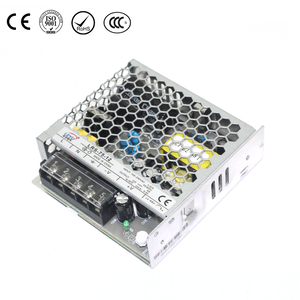
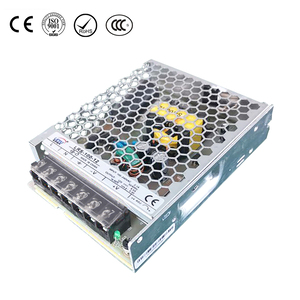
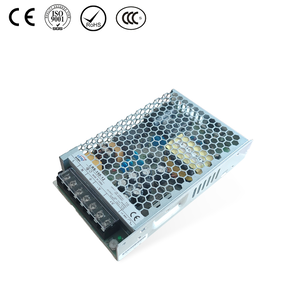
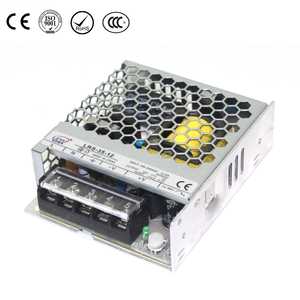
Introduction to Bare Board Switching Power Supply
Date:2026-01-28 04:23:59 Visit:870
Appearance
A bare-board switching power supply is mainly composed of key components such as a transformer, rectifier circuit, filter circuit, and control circuit. It has no casing and is a power conversion device directly mounted on the circuit board. It is compact, lightweight, portable, has good heat dissipation, and extends service life.
Features
1. Wide input voltage range, supporting 85~264VAC, ensuring stable operation under various power grid conditions.
2. Equipped with overload, overvoltage, short circuit, and over-temperature protection functions, effectively safeguarding the power module and connected devices.
3. Compact size, convenient for integration into space-limited equipment.
4. High efficiency (up to 82%), low standby power consumption, energy-saving and environmentally friendly.
5. Ultra-low standby noise, suitable for noise-sensitive environments.
6. High output voltage accuracy (±1%) and low ripple (<100mVp-p), providing a stable power supply.
7. Compliant with UL60950-1 and TUV EN60950-1 standards, I/P-O/P withstand voltage 3KVAC, insulation resistance 500VDC/100M Ohms, safe and reliable.
Precautions
1. Before using the power supply, make sure that the input and output voltage specifications match the nominal values of the power supply used;
2. Before powering on, check whether the input and output leads are connected correctly to avoid damage to the user's equipment;
3. Check whether the installation is secure, whether the mounting screws are in contact with the power supply components, and measure the insulation resistance between the casing and the input/output to prevent electric shock;
4. To ensure safety and reduce interference, make sure the grounding terminal is properly grounded;
Application Scenario
This power module is widely used in industrial automation, communication equipment, medical instruments, consumer electronics, and other fields. For example, in industrial automation, it can provide stable and reliable power for PLCs, sensors, actuators, and other devices; In communication equipment, it is suitable for internal power supply of base stations, routers, switches, etc.; In medical instruments, it can be used as a power module for monitors and diagnostic equipment. Its wide range of input voltages and multiple protection functions enable it to work stably in complex and changeable industrial environments, solving equipment failures caused by voltage fluctuations. At the same time, its compact size and high efficiency characteristics are particularly suitable for application scenarios with limited space and high requirements for energy efficiency.
