


-134213.jpg)
24V vs. 48V Battery Cabinets: How to Choose the Best Energy Storage Voltage for Your Needs?
Date:2026-07-29 04:24:35 Visit:241
I. Why is voltage so important?
Voltage determines the "backbone" of the entire energy storage system. From battery cabinets to inverters, and from charge controllers to power distribution lines, all components must be designed and selected based on the system voltage. Choosing the wrong voltage can lead to unnecessary costs at best, or limit the system's expansion potential at worst.
In the realm of battery cabinets, 24V and 48V are the two most common voltage levels. So, what exactly is the difference between them?
II. 24V vs. 48V: An In-Depth Comparison Across Five Key Dimensions
1. Efficiency and Line Loss: 48V Wins Hands Down
At the same power output, higher voltage results in lower current. Since line loss is proportional to the square of the current (P_loss = I²R), this implies:The current in a 48V system is only half that of a 24V system.
Line loss in a 48V system is only one-quarter that of a 24V system.
Studies show that, at the same power level, ohmic losses in a 48V system are 75% lower than in a 24V system. This means less electrical energy is converted into wasted heat, and more is effectively utilized.
In practical terms, this means a 48V 100Ah battery cabinet can power a 1500W load for approximately 6.8 hours, whereas a 24V system of the same capacity can only run for 3.4 hours.
2. Cable Specifications: 48V is More Economical and Easier to Install
Higher voltage allows for lower current, which in turn permits the use of thinner cables. Experienced installers know that 12V systems require massive cables; 24V systems allow for a reduction in wire gauge, and 48V systems allow for even thinner cables.Thinner cables are not only less expensive but also more flexible and easier to route—advantages that are particularly significant when long-distance connections are required between the battery cabinet and the inverter.
3. Operating Voltage Range: 48V Offers Greater Fault Tolerance
This is a key difference that many users overlook. The operating voltage ranges for lithium batteries are as follows:System Voltage Full-Charge Voltage Cut-off Voltage Usable Voltage Range
24V 28.7V 24.5V Approx. 4V
48V 57.4V 49.0V Approx. 8V
The usable voltage range of a 48V system is double that of a 24V system. This means the 48V system has a larger voltage "buffer zone" during discharge; it takes longer to go from full charge to cut-off, resulting in more stable system operation.
4. Equipment Cost: Little difference; 48V can even be cheaper
Many people mistakenly believe that 48V equipment is more expensive, but the reality is quite the opposite. Regarding inverters, there is little price difference between 24V and 48V models; in fact, the 48V version is sometimes cheaper because the internal components can utilize thinner wiring to handle the switching operations.The same applies to charge controllers. Take LEYU’s OPM series MPPT solar charge controllers, for example: a single unit can automatically detect 12V, 24V, or 48V systems, eliminating the need to purchase different models for different voltages.
5. Application Scenarios: Each has its strengths
24V battery cabinets are better suited for:Mobile power systems for RVs
Small off-grid cabins or single-room power supply
Light-load AGVs and small telecom sites
System upgrades or expansions where 24V equipment is already in place
Medium-scale applications with power demands between 1000W and 2000W
48V battery cabinets are better suited for:
Whole-house power supply systems
Small-scale commercial energy storage projects
Long-distance power transmission scenarios (cable runs exceeding 10 meters)
High-load applications with power demands exceeding 2000W
Systems with future expansion plans
3. Why do most people recommend 48V?
In discussions within professional energy storage communities, a senior administrator offered clear advice:
"48V is generally better than 24V because wiring is easier, component costs are comparable, and runtime is longer. Unless your specific application actually requires 24V—such as when using existing 24V equipment or connecting to an existing 24V system—48V is usually the recommended choice."Another experienced user added:
"If you might increase your power consumption in the future, 48V is definitely the better option, and it also results in lower power loss."IV. Selection Guide
When should you choose 24V?
✅ You already own core equipment such as 24V inverters or chargers✅ The system is for mobile applications (RVs, boats, etc.)
✅ Total power demand is under 2000W
✅ The system is small-scale, with no plans for significant future expansion
When should you choose 48V?
✅ Building a new system without the constraints of existing equipment✅ Whole-home power supply or commercial applications
✅ Total power demand exceeds 2000W
✅ There is a significant distance between the inverter and the battery cabinet
✅ You desire good system scalability
✅ You prioritize higher energy efficiency
V. LEYU: Your Reliable Partner in Energy Storage Systems
Whether you require a 24V or 48V setup, LEYU offers professional power solutions tailored to your needs.The LEYU OPM series MPPT solar charge controllers feature automatic 12V/24V/48V system recognition, achieving an MPPT efficiency of ≥99.5% and a conversion efficiency of ≥96.5%. They are compatible with various battery types, including sealed lead-acid, gel, and nickel-cadmium. The 48V models support up to 3400W of PV input, meeting diverse requirements ranging from residential to small-scale commercial applications.
Taking performance a step further, the LEYU 48BL series MPPT charge controllers are available in 80A and 100A specifications. These units support up to 5200W of PV power in 48V systems and come equipped with RS485 communication interfaces, enabling both PC software and mobile app cloud monitoring so you can stay informed of system status at all times.
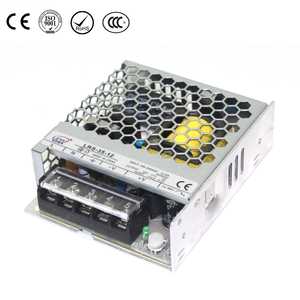
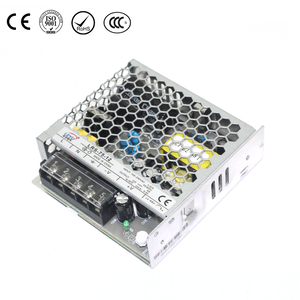
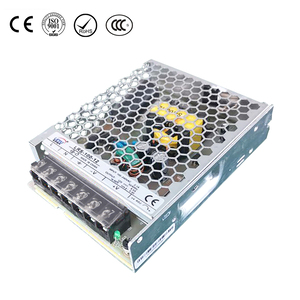
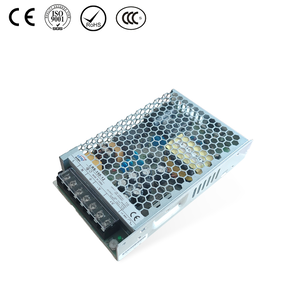
Additionally, LEYU offers adjustable high-voltage DC power supplies (12V–48V) with power outputs up to 1920W. Featuring multiple protections—including over-voltage, over-current, and short-circuit safeguards—these units are ideal for industrial automation and robotics applications.
Established in 2007, LEYU is a high-tech enterprise specializing in the R&D and manufacturing of switching power supplies, inverters, and transfer switches. From MPPT controllers to power supplies, LEYU provides professional products that cover the entire energy storage system value chain.
VI. Conclusion: Making a Wise Choice for the Future
Choosing between a 24V and a 48V battery cabinet essentially involves balancing immediate costs against future scalability.
If you are planning a brand-new energy storage system and anticipate potential growth in power demand, 48V is undoubtedly the more forward-looking choice—offering higher efficiency, lower line losses, thinner cabling, and a wider operating voltage range, all at virtually the same equipment cost.
If you are upgrading an existing 24V system or setting up a low-power mobile application, 24V remains a solid option.
Regardless of your choice, LEYU is here to provide professional, reliable support for your power products.
