


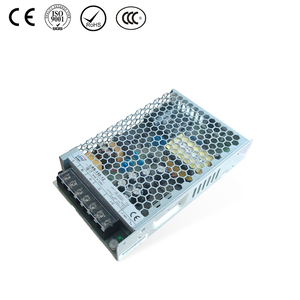
How to Read a Switching Power Supply Datasheet: 10 Specifications Buyers Should Check
Date:2026-11-21 01:15:33 Visit:24
When purchasing an industrial switching power supply, checking only the rated wattage and output voltage is not enough. Two power supplies with the same power rating may have significant differences in input voltage range, output stability, ripple and noise, efficiency, protection functions, and operating temperature.
These differences can directly affect equipment reliability, electrical compatibility, and long-term operating performance.
A switching power supply datasheet provides the technical information needed to evaluate these factors. However, for buyers who are not familiar with power electronics terminology, understanding all the specifications can be challenging.
In this guide, we explain 10 important specifications to check when reading a switching power supply datasheet, with practical examples to help engineers, purchasing managers, OEM manufacturers, and system integrators make better decisions.
What Is a Switching Power Supply Datasheet?
A switching power supply datasheet is a technical document that describes the electrical, environmental, mechanical, and safety characteristics of a power supply.
It helps buyers determine whether a power supply is suitable for a particular application.
A typical AC-DC switching power supply datasheet includes:
-
Input voltage and frequency range
-
Output voltage and rated current
-
Rated output power
-
Voltage tolerance
-
Ripple and noise
-
Line and load regulation
-
Conversion efficiency
-
Protection functions
-
Operating temperature
-
Installation and safety information
Before comparing different manufacturers, it is important to understand what each specification means and how it affects actual equipment operation.
1. Input Voltage Range: Can the Power Supply Handle Your Available Supply?
Input voltage range defines the AC or DC voltage that a power supply can accept while operating within its specified conditions.
For industrial AC-DC switching power supplies, the input voltage specification is usually expressed in volts AC (VAC), sometimes accompanied by a frequency range in hertz (Hz).
For example:
-
85–264VAC
-
100–240VAC
-
47–63Hz
A wide input voltage range allows a power supply to operate across different electrical supply conditions.
However, buyers should distinguish between:
-
Rated input voltage: The nominal input voltage used for normal operation or specification testing.
-
Allowable input voltage range: The permitted operating boundaries specified by the manufacturer.
-
Input frequency range: The AC frequency that the power supply can accept.
Some products also support DC input. If DC input is required, check the specified DC range separately rather than assuming that an AC voltage range automatically applies.
Practical example:
LEYU's ZDR5-120 DIN rail power supply lists an input voltage range of 100–240VAC and 90–350VDC, with an allowable AC range of 85–264VAC.
This information is useful when evaluating whether the power supply is compatible with the available electrical supply.
Buyer tip: Always compare the actual site voltage with the manufacturer's specified operating range. Do not select a power supply based only on its nominal voltage.
2. Output Voltage: Does It Match Your Equipment Requirements?
Output voltage is the regulated DC voltage supplied to the connected equipment.
Common industrial switching power supply output voltages include:
-
5V DC
-
12V DC
-
15V DC
-
24V DC
-
36V DC
-
48V DC
The correct output voltage depends on the electrical requirements of the connected load.
For example:
-
PLC control circuits commonly use 24V DC.
-
Industrial sensors may require 12V or 24V DC.
-
Communication equipment may use 12V or 48V DC.
-
LED systems may require 5V, 12V, or 24V DC.
Choosing the wrong output voltage may prevent equipment from operating correctly or potentially damage connected components.
It is also important to distinguish between nominal output voltage and adjustable voltage range.
Some power supplies include a voltage adjustment potentiometer, allowing limited adjustment around the nominal output voltage.
For example, LEYU's ZDR5-120 provides a nominal 24V DC output and a voltage adjustment range of -10% to +15%.
This adjustment can help accommodate certain application requirements, but it does not turn a 24V power supply into a general-purpose variable-voltage supply.
Buyer tip: Check the equipment manufacturer's required DC voltage and allowable tolerance before purchasing.
3. Rated Output Current and Power: Can the Supply Handle Your Load?
Rated output current and rated output power determine how much electrical load a switching power supply can support.
The relationship between output voltage, current, and power is:
P = V × I
Where:
-
P = Output power (W)
-
V = Output voltage (V)
-
I = Output current (A)
For example, a 24V power supply rated at 5A provides:
24V × 5A = 120W
This means the power supply has a rated output capacity of 120W.
However, selecting a power supply based only on the calculated steady-state load is not always sufficient.
Buyers should also consider:
-
Continuous operating current
-
Equipment startup current
-
Simultaneous operation of connected devices
-
Future load expansion
-
Operating temperature and derating requirements
For example, if an industrial control system requires 4A at 24V, its calculated load is:
24V × 4A = 96W
A 120W power supply provides a nominal capacity above this calculated load. However, the final selection must still account for actual operating conditions, transient demand, and the manufacturer's derating requirements.
Buyer tip: Do not confuse rated current with the maximum adjustable current or overload protection threshold. These values serve different purposes.
4. Voltage Tolerance and Adjustment Range: How Stable Is the Output?
Voltage tolerance describes the permitted deviation of the output voltage from its nominal value under specified test conditions.
For example, a 24V power supply with ±1% voltage tolerance has an output tolerance of:
24V × 1% = 0.24V
The corresponding voltage range is:
23.76V to 24.24V.
A smaller voltage tolerance generally indicates tighter output voltage accuracy.
Voltage adjustment range is different. It describes how far the output voltage can be manually adjusted using the built-in adjustment control.
For example:
-
Nominal output voltage: 24V
-
Adjustment range: -10% to +15%
This means the output can be adjusted within the manufacturer's specified range.
These two specifications should not be confused. Voltage tolerance describes output accuracy, while adjustment range describes the available manual adjustment.
Buyer tip: If your equipment contains sensitive electronic components, check both voltage tolerance and adjustment range.
5. Ripple and Noise: How Clean Is the DC Output?
Ripple and noise refer to unwanted AC components and high-frequency disturbances present in the DC output voltage.
Although a switching power supply provides DC output, its switching operation creates residual fluctuations.
Ripple and noise are commonly expressed in millivolts peak-to-peak (mVp-p).
For example:
-
50mVp-p
-
100mVp-p
-
150mVp-p
-
200mVp-p
Generally, lower ripple and noise are desirable for applications that require cleaner DC power.
These applications may include:
-
Sensitive electronic circuits
-
Measurement equipment
-
Communication systems
-
Industrial control circuits
-
Electronic instruments
However, the acceptable ripple level depends on the connected equipment.
A PLC power supply, for example, may have different ripple requirements from a sensitive analog measurement circuit.
It is also important to check the measurement conditions stated in the datasheet. Bandwidth limits, measurement methods, and test setups can affect reported ripple and noise values.
Buyer tip: Do not compare ripple figures from different manufacturers without checking whether they were measured under comparable conditions.
6. Line Regulation and Load Regulation: How Well Does the Output Stay Stable?
Line regulation and load regulation describe how well a power supply maintains its output voltage when operating conditions change.7. Efficiency: How Effectively Does the Power Supply Convert Energy?
Efficiency describes the proportion of input power converted into useful output power.
8. Protection Functions: How Does the Power Supply Respond to Electrical Faults?
Protection functions help prevent damage to the power supply and reduce risks associated with abnormal operating conditions.
Common protection functions include:
Short-Circuit Protection
Short-circuit protection responds when the output terminals are accidentally connected together or an output fault creates an excessive current condition.
Overload Protection
Overload protection responds when the connected load demands more power or current than the power supply is designed to provide.
Overvoltage Protection
Overvoltage protection helps prevent the output voltage from exceeding the specified protection threshold.
Overtemperature Protection
Overtemperature protection responds when the internal temperature exceeds the manufacturer's specified limit.
Not every switching power supply includes all four protection functions.
For example, some LEYU product series specify short-circuit, overload, and overvoltage protection, while certain industrial DIN rail models also list overtemperature protection.
Buyers should check the individual product datasheet to confirm which protection functions are included.
It is equally important to understand the recovery behavior.
Depending on the design, a power supply may use:
-
Automatic recovery
-
Hiccup-mode protection
-
Output shutdown
-
Manual power cycling
Buyer tip: Check both the protection function and its recovery method. The presence of overload protection alone does not tell you how the product will behave during a fault.
9. Operating Temperature and Derating: Can It Work in Your Environment?
Operating temperature defines the ambient temperature range in which a power supply is designed to operate.
This specification is particularly important for industrial applications because power supplies may be installed inside enclosed electrical cabinets.
The actual operating environment can be affected by:
-
Ambient temperature
-
Cabinet ventilation
-
Nearby heat-generating equipment
-
Installation spacing
-
Continuous operating load
A key concept to understand is power derating.
Derating means that the permitted output power may need to be reduced under certain operating conditions, particularly at elevated ambient temperatures.
For example, a power supply rated at 120W under specified conditions may not be able to continuously deliver the full 120W at every temperature.
The exact permitted output depends on the manufacturer's derating curve.
When checking a datasheet, look for:
-
Operating temperature range
-
Temperature derating curve
-
Cooling method
-
Installation clearance requirements
-
Humidity limitations
A power supply using free-air convection cooling, for example, requires suitable airflow around the unit.
Installing it in a tightly enclosed cabinet without sufficient ventilation can increase internal temperature and affect long-term reliability.
Buyer tip: Always check the derating curve rather than assuming that rated output power is available across the entire operating temperature range.
10. Installation, Mechanical Dimensions, and Safety Specifications
Electrical compatibility is only part of the selection process. The power supply must also fit the installation environment.
Important mechanical and installation specifications include:
Mounting Type
Common installation options include:
-
DIN rail mounting
-
Enclosed chassis mounting
-
Panel mounting
For industrial control cabinets, DIN rail power supplies are widely used because they can be mounted on standard rails and integrated into electrical control systems.
Mechanical Dimensions
Check:
-
Length
-
Width
-
Height
-
Mounting dimensions
-
Terminal accessibility
-
Required installation clearance
These details are important when replacing an existing power supply or designing a compact electrical enclosure.
Cooling Method
Common cooling methods include:
-
Free-air convection
-
Forced-air cooling using a fan
The cooling method affects installation requirements and thermal management.
Safety and EMC Information
Depending on the application and target market, buyers may also need to verify:
-
Electrical isolation
-
Dielectric withstand voltage
-
Insulation resistance
-
Safety approvals
-
Electromagnetic compatibility (EMC)
-
Applicable product standards
Do not assume that a particular certification applies to every model in a product series. Always request the relevant documentation for the exact model being purchased.
Common Mistakes When Reading a Switching Power Supply Datasheet
Even experienced purchasing professionals can overlook important specifications.
Here are five common mistakes to avoid.
1. Comparing Only Rated Wattage
Two 120W power supplies may have different input ranges, ripple levels, efficiency, and protection functions.
Rated wattage alone is not enough to determine whether they are interchangeable.
2. Confusing Rated Current with Peak Current
Rated current is the specified continuous output current under defined conditions.
Peak current capability, if specified, may apply only for a limited duration or under particular conditions.
3. Ignoring Temperature Derating
A power supply's rated output cannot automatically be assumed to remain available at elevated ambient temperatures.
Always check the manufacturer's derating curve.
4. Assuming All Models Have the Same Protection Functions
Different models within the same manufacturer's product range may have different protection configurations.
Check the exact model datasheet.
5. Ignoring Mechanical Compatibility
A replacement power supply may have the correct voltage and power rating but still fail to fit the existing cabinet or mounting arrangement.
Check dimensions, mounting type, terminal layout, and ventilation requirements.
How to Choose the Right Switching Power Supply for Your Application
After reviewing the datasheet, the next step is to compare its specifications with your equipment requirements.
Before making a purchasing decision, confirm the following:
-
Is the input voltage compatible with your electrical supply?
-
Does the output voltage match your equipment?
-
Is the rated current sufficient for continuous operation?
-
Is the rated power suitable for the actual load?
-
Are ripple and noise within acceptable limits?
-
Are voltage tolerance and regulation suitable?
-
Is efficiency appropriate for the application?
-
Are the required protection functions included?
-
Can the power supply operate within the actual temperature conditions?
-
Does its mounting type and physical size fit your installation?
For OEM manufacturers and equipment builders, it is also important to discuss customization requirements with the power supply manufacturer before finalizing the design.
These may include output voltage, output current, terminal configuration, enclosure dimensions, mounting requirements, and other application-specific characteristics.
Looking for a Reliable Switching Power Supply Manufacturer?
Understanding a switching power supply datasheet is an important step in choosing the right product. However, selecting a suitable manufacturer is equally important.
LEYU Electrical specializes in AC-DC switching power supplies, DIN rail power supplies, DC-DC converters, industrial power supplies, and power inverters.
With in-house manufacturing, engineering experience, and OEM/ODM customization capabilities, LEYU supports customers looking for power supply solutions for industrial, commercial, and electrical applications.
Whether you are sourcing a standard 24V DC power supply, developing an industrial control system, or looking for a customized power supply for your equipment, providing the electrical requirements and application details helps us identify a suitable product.
Contact LEYU to discuss your power supply requirements.
Website: https://www.leyuelec.com/
Email: sales@leyuelec.com
