



Isolated vs Non-Isolated DC-DC Converter: Differences, Benefits, and Applications
Date:2026-11-20 02:30:55 Visit:5
When selecting a DC-DC converter for an industrial control system, communication device, or electronic application, one important decision is whether to use an isolated or non-isolated design.
Both types convert one DC voltage level into another, but they differ in how their input and output circuits are electrically connected.
An isolated DC-DC converter provides galvanic isolation between the input and output circuits. A non-isolated DC-DC converter maintains an electrical connection between them, typically through a shared ground reference.
This difference affects more than circuit design. It can influence grounding arrangements, electrical noise, system protection, installation requirements, product size, cost, and overall performance.
In this guide, we explain how isolated and non-isolated DC-DC converters work, compare their advantages and limitations, and discuss how to choose the appropriate type for your application.
1. What Is an Isolated DC-DC Converter?
An isolated DC-DC converter transfers electrical energy from its input to its output without a direct conductive connection between the two circuits.
In a typical isolated design, a high-frequency transformer transfers energy across an insulation barrier. The input and output sides therefore form separate electrical potential domains.
Unlike a conventional non-isolated converter, the input negative terminal and output negative terminal are not directly connected inside the converter.
How does an isolated DC-DC converter work?
A typical isolated DC-DC conversion process includes:
-
The input DC voltage is converted into a high-frequency switching waveform.
-
Energy is transferred through a transformer across the isolation barrier.
-
The secondary-side circuit rectifies and filters the transferred energy.
-
The output circuit provides the required DC voltage to the load.
The transformer provides galvanic separation between the primary and secondary circuits.
Common isolated converter topologies include:
-
Flyback
-
Forward
-
Push-pull
-
Half-bridge
-
Full-bridge
Different topologies are designed for different power levels, voltage conversion requirements, and performance targets.
Main benefits of isolated DC-DC converters
1. Electrical separation between input and output
The isolation barrier separates the input and output circuits electrically. This allows different reference potentials to be used on each side.
2. Ground loop management
An isolated power supply can help prevent unwanted direct ground-current paths between two circuit sections. This is useful in systems where equipment is connected to different grounding points.
3. Greater flexibility in grounding
The output side can use an independent reference potential. Depending on the circuit design and system requirements, this provides more flexibility when powering remote sensors, communication interfaces, or separate control circuits.
4. Support for defined insulation requirements
An isolated converter can be designed and tested against specified insulation requirements. However, whether it provides functional, basic, or reinforced insulation depends on its design, ratings, construction, and applicable standards.
Galvanic isolation alone does not automatically establish that a converter is suitable for every safety-critical application.
2. What Is a Non-Isolated DC-DC Converter?
A non-isolated DC-DC converter changes the DC voltage level while maintaining an electrical connection between the input and output circuits.
In many common designs, the input and output share a common ground or negative reference.
Non-isolated converters generally use inductors, capacitors, and semiconductor switching devices to regulate the output voltage without an isolation transformer.
How does a non-isolated DC-DC converter work?
A switching controller controls semiconductor devices, typically MOSFETs, to regulate the energy transferred to the output.
Depending on the topology, the converter can step voltage down, step voltage up, or provide both functions.
Common non-isolated topologies include:
-
Buck converter: steps down the input voltage.
-
Boost converter: steps up the input voltage.
-
Buck-boost converter: can step the voltage up or down.
-
SEPIC converter: provides non-inverting step-up or step-down conversion.
-
Ćuk converter: provides step-up or step-down conversion with an inverted output polarity in its conventional form.
Main benefits of non-isolated DC-DC converters
1. Simpler circuit structure
Without an isolation transformer and its associated circuitry, many non-isolated designs can use a simpler power conversion architecture.
2. Compact design
The absence of an isolation transformer can reduce component count and make compact designs easier to achieve.
3. Potentially higher efficiency
Non-isolated designs can avoid some transformer-related losses. In applications that do not require galvanic isolation, this can provide an efficiency advantage.
However, actual efficiency depends on the topology, switching frequency, components, input/output voltage ratio, load, and thermal design.
4. Lower implementation cost
For applications that do not need electrical isolation, a non-isolated converter can be a cost-effective solution.
5. Suitable for shared-ground systems
When the input and output are intended to share the same ground reference, a non-isolated converter can provide a straightforward way to generate another DC voltage.
3. Isolated vs Non-Isolated DC-DC Converter: Key Differences
The most important difference is the electrical relationship between the input and output circuits.
Electrical isolation and grounding are not the same thing
An isolated DC-DC converter provides separation between its input and output inside the converter.
However, the output can still be connected to protective earth, functional earth, or another circuit reference elsewhere in the system.
If another connection joins the two sides, the overall system may no longer maintain the intended separation.
Therefore, engineers should review the complete electrical architecture, including signal connections, communication interfaces, cable shields, and grounding arrangements.
4. When Should You Use an Isolated DC-DC Converter?
An isolated DC-DC converter is worth considering when the application requires electrical separation between two circuit sections.
Typical situations include the following.
4.1 Industrial Control Systems
Industrial control equipment may contain PLCs, sensors, communication modules, and remote I/O devices connected through different electrical circuits.
In some installations, these circuits may have different ground potentials or be exposed to electrical interference.
An isolated DC-DC converter can provide a separate power domain for a control or interface circuit.
Whether isolation is necessary depends on the equipment architecture and the applicable electrical requirements.
4.2 Communication and Interface Circuits
Communication systems may connect devices located in different parts of a facility.
Ground potential differences and unwanted current paths can affect signal quality or equipment operation.
An isolated power supply can help separate the power reference of an interface circuit from the main system supply.
It should be considered together with the signal isolation and grounding design. Isolating only the power supply does not necessarily isolate the communication interface.
4.3 Sensor and Measurement Systems
Sensitive measurement circuits may need a separate power reference to reduce unwanted coupling from other equipment.
An isolated DC-DC converter can supply the measurement side without directly connecting its ground to the main power supply ground.
The complete design should also consider signal wiring, shielding, filtering, and common-mode interference.
4.4 Systems with Different Ground Potentials
When two connected devices operate at different ground potentials, a direct electrical connection may create unwanted current paths.
An isolated converter can help separate their power circuits, provided that other connections do not bypass the isolation barrier.
5. When Should You Use a Non-Isolated DC-DC Converter?
A non-isolated converter is often appropriate when the input and output are designed to share a common electrical reference and no galvanic isolation requirement exists.
Typical applications include:
5.1 Local Voltage Regulation
A control board may receive a 24V DC supply and require a lower voltage for its electronic components.
A non-isolated buck converter can provide the required voltage while maintaining the common ground reference.
5.2 Embedded Electronic Systems
Microcontrollers, digital circuits, and other electronic modules often require different DC voltage levels within the same system.
Non-isolated converters are commonly used for local power regulation in these applications.
5.3 Battery-Powered Equipment
Battery-powered systems may need to convert one DC voltage level into another for different loads.
Where the circuit architecture does not require galvanic isolation, a non-isolated converter may provide a compact and efficient solution.
5.4 Distributed Power Systems
Some systems use a central power supply to establish the required isolation and generate an intermediate DC bus.
Non-isolated converters can then regulate voltage locally for downstream circuits.
This approach can avoid adding unnecessary isolation stages to every load, provided that the overall system's insulation and safety requirements are properly addressed.
6. How to Choose Between Isolated and Non-Isolated DC-DC Converters
There is no universally better option. The correct choice depends on the electrical architecture and requirements of the application.
Before selecting a converter, consider the following questions.
Step 1: Is Galvanic Isolation Required?
First, determine whether the input and output circuits must be electrically separated.
Isolation may be required for a defined safety function, functional separation, or ground loop management.
Do not add isolation simply because it sounds safer. Identify the actual requirement and the insulation level needed.
Step 2: Do the Input and Output Need a Common Ground?
If both sides are designed to share the same 0V reference, a non-isolated converter may be suitable.
If they require separate reference potentials, consider an isolated converter.
Step 3: Are There Ground Potential Differences?
In systems with remote equipment or multiple grounding points, evaluate whether a direct ground connection could create unwanted current paths.
An isolated converter may help, but the entire grounding and signal connection arrangement must be reviewed.
Step 4: What Are the Size, Cost, and Efficiency Requirements?
If isolation is not required, a non-isolated design may offer advantages in size, component count, cost, and efficiency.
If isolation is required, those considerations should be balanced against the electrical and functional requirements.
Step 5: Check the Technical Specifications
After deciding on the isolation type, verify the converter's actual specifications.
Important parameters include:
-
Input voltage range
-
Output voltage
-
Rated output current
-
Rated output power
-
Efficiency
-
Output voltage regulation
-
Ripple and noise
-
Isolation test voltage, if applicable
-
Operating temperature range
-
Protection functions
-
Mounting and installation requirements
For isolated converters, also review the specified working voltage, insulation classification, creepage distance, clearance, and relevant safety documentation where applicable.
7. Important Specifications to Check Before Buying a DC-DC Converter
Selecting the correct isolation type is only the first step. The converter must also match the electrical and environmental conditions of the application.
Input Voltage Range
Check the minimum and maximum input voltage expected during normal operation.
A converter should be selected according to the actual input range, not only the nominal voltage.
Output Voltage and Current
Confirm that the output voltage matches the load requirements and that the rated output current is sufficient.
For multiple loads, calculate the total demand and consider startup or peak current where applicable.
Rated Output Power
The rated power must support the connected load under the specified operating conditions.
Also check whether the output power is subject to temperature-related derating.
Isolation Rating
For an isolated converter, do not compare products only by their isolation test voltage.
Check the manufacturer's specified isolation test conditions, working voltage, insulation type, and applicable standards.
A test voltage is not automatically the same as an allowable continuous working voltage.
Operating Temperature
Industrial equipment may operate inside cabinets or enclosures where ambient temperature is higher than the surrounding room temperature.
Review the operating temperature range and any output derating requirements.
Protection Functions
Depending on the application, verify whether the converter provides the required overload, overvoltage, short-circuit, and overtemperature protection.
Do not assume that all models provide identical protection functions.
8. LEYU Isolated DC-DC Converter Solutions
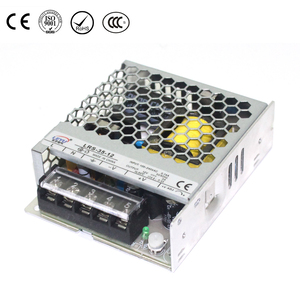
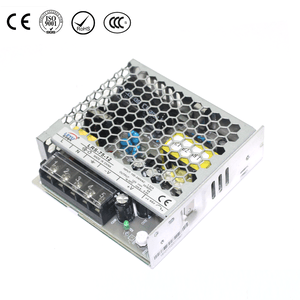
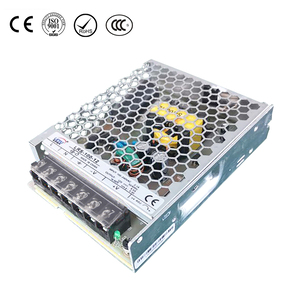
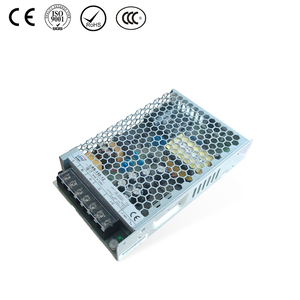
For applications requiring galvanic isolation between input and output circuits, LEYU Electrical offers isolated DC-DC converter products in its SD series.
When evaluating a DC-DC converter for an industrial application, it is important to compare the actual product specifications with the electrical and installation requirements of the equipment.
Depending on the selected model, buyers should review:
-
Input voltage range
-
Output voltage and rated current
-
Rated output power
-
Input-to-output isolation specification
-
Operating temperature range
-
Product dimensions and mounting requirements
-
Protection functions
For example, the isolation specification listed in a product datasheet should be checked together with the corresponding test conditions and other applicable ratings.
The correct model depends on the application's input voltage, required output, load characteristics, and isolation requirements.
Looking for an isolated DC-DC converter for your industrial application?
Contact LEYU Electrical with your input voltage, required output voltage and current, application details, and isolation requirements. Our team can help review the relevant product specifications and discuss suitable options.
