


-134213.jpg)
Open Frame vs Enclosed Power Supply: Differences & How to Choose
Date:2026-09-12 04:26:30 Visit:27
What Is an Open Frame Power Supply?
An open frame power supply is a switching power supply designed without a complete external metal enclosure. Its internal PCB and electrical components are exposed or intended to be installed inside the customer's equipment.
This design provides a compact structure and allows the power supply to be integrated directly into equipment.
Open frame power supplies are commonly used in:
- Industrial control equipment
- Automation systems
- Medical and laboratory equipment
- LED displays and lighting equipment
- Office equipment
- Communication equipment
- Embedded electronic devices
- Other enclosed electronic systems
Because the power supply is normally installed inside another enclosure, the customer's equipment housing can provide additional mechanical protection.
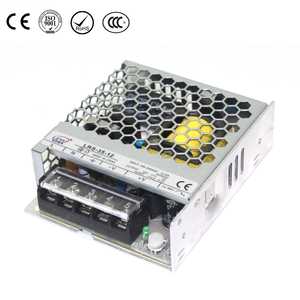
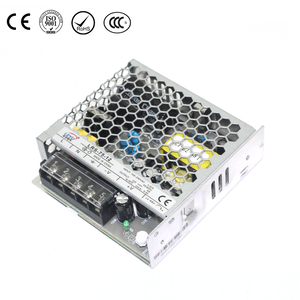
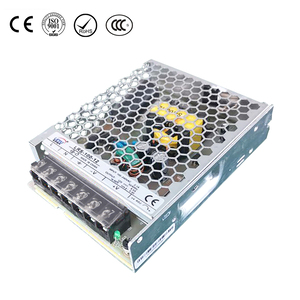
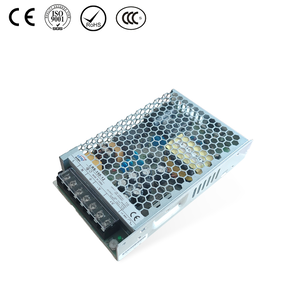
What Is an Enclosed Power Supply?https://www.leyuelec.com/products/lrs-35-35w-enclosed-switching-power-supply.html
An enclosed power supply is a switching power supply installed inside a protective metal or other suitable enclosure.
The enclosure protects internal components from accidental contact and provides additional mechanical protection during installation and operation.
Enclosed power supplies are widely used in:
- Industrial automation
- Control cabinets
- LED lighting systems
- Security equipment
- Communication systems
- Factory equipment
- Access control systems
- Industrial machinery
Depending on the model, an enclosed power supply may use natural convection or forced-air cooling, such as an integrated cooling fan.
Open Frame vs Enclosed Power Supply: Key Differences
The main differences can be compared across six important factors: protection, cooling, installation, size, cost, and application.
|
Feature |
Open Frame Power Supply |
Enclosed Power Supply |
|
Protection |
Usually requires installation inside equipment |
Built-in external enclosure |
|
Cooling |
Good airflow and heat dissipation when properly integrated |
Natural convection or fan cooling depending on design |
|
Installation |
Designed for internal equipment integration |
Easier for standalone or cabinet installation |
|
Size |
Usually compact and space-efficient |
Generally larger because of the enclosure |
|
Cost |
Often lower for the same power range |
Usually higher due to enclosure and mechanical structure |
|
Application |
Embedded equipment and space-limited systems |
Industrial equipment, control cabinets and standalone installations |
Let's look at these differences in more detail.
1. Protection
Protection is one of the most important differences between the two designs.
An open frame power supply does not have a complete external enclosure. It is therefore normally installed inside the customer's equipment, where the equipment housing provides mechanical protection and helps prevent accidental contact with electrical components.
An enclosed power supply has its own protective housing. This provides additional mechanical protection and makes the power supply a more self-contained component.
However, an enclosed power supply should not automatically be considered waterproof or suitable for outdoor use.
If the application involves dust, moisture, vibration, or other harsh conditions, check the specific product's environmental specifications and IP rating where applicable.
2. Cooling and Thermal Management
Cooling performance depends on the complete system design rather than simply whether a power supply is open frame or enclosed.
An open frame power supply has a relatively open structure, which can allow airflow around the components. When correctly integrated into equipment, this can support effective heat dissipation.
However, the final thermal performance depends on factors such as:
- Ambient temperature
- Airflow
- Installation orientation
- Load level
- Power supply efficiency
- Equipment enclosure design
Enclosed power supplies dissipate heat through their housing and may use natural convection or a cooling fan, depending on the design and power rating.
For higher-power applications, forced-air cooling may improve heat dissipation, but fans also introduce moving components and may increase acoustic noise.
Neither design is inherently better for cooling. The actual thermal performance depends on the power supply design and the equipment environment.
3. Installation
Installation requirements are another major consideration.
An open frame power supply is normally integrated directly into the customer's equipment. This makes it suitable for custom equipment where the power supply becomes part of the overall internal design.
An enclosed power supply already has its own housing and mounting structure, making it convenient for installation inside control cabinets, industrial equipment, and other systems.
If the equipment manufacturer has full control over the internal mechanical design, an open frame solution can provide more flexibility.
If straightforward installation and built-in mechanical protection are priorities, an enclosed design may be more convenient.
4. Size
An open frame power supply can offer a compact solution because it does not require a complete external enclosure.
This can be particularly valuable in:
- Compact industrial equipment
- Embedded electronic devices
- Space-limited control systems
- Custom equipment
- Small automation systems
An enclosed power supply requires additional physical space for the housing. However, the additional enclosure can simplify installation and provide mechanical protection.
Therefore, the smallest power supply is not always the best solution. The available installation space and the mechanical design of the complete system should both be considered.
5. Cost
Cost is another factor when choosing between open frame and enclosed designs.
An open frame power supply generally has a simpler mechanical structure because it does not require a complete external housing. This can help reduce the product cost.
An enclosed power supply includes additional mechanical components, such as the enclosure and mounting structure, and may also include a cooling fan. These features can increase the product cost.
However, engineers should consider total system cost, not only the purchase price of the power supply.
For example, if an open frame power supply requires the equipment manufacturer to design and manufacture a separate protective enclosure, the overall system cost may increase.
6. Application
The intended application is often the most practical way to choose between the two designs.
When Should You Choose an Open Frame Power Supply?
An open frame power supply may be a good choice when:
- The power supply will be installed inside existing equipment
- Installation space is limited
- The equipment already provides mechanical protection
- A compact design is important
- Custom integration is required
- Equipment manufacturers want greater mechanical design flexibility
When Should You Choose an Enclosed Power Supply?
An enclosed power supply may be more suitable when:
- The power supply needs its own protective housing
- Simple installation is important
- The unit will be installed in a control cabinet
- Mechanical protection is required
- The power supply will be used as a more self-contained component
- Industrial equipment requires a standardized installation approach
Open Frame vs Enclosed Power Supply: Which One Should You Choose?
There is no universal winner between open frame and enclosed power supplies.
The best choice depends on your equipment design and application requirements.
Choose Open Frame If:
Compact design + internal integration + existing equipment enclosure are your main priorities.
An open frame power supply can provide greater flexibility when the power supply is designed into the internal structure of the equipment.
Choose Enclosed If:
Built-in protection + simpler installation + self-contained design are more important.
An enclosed power supply can be a practical choice for industrial equipment, control cabinets, and applications where a protective housing is preferred.
What Specifications Should You Check Before Choosing?
Choosing between open frame and enclosed designs is only the first step.
Before selecting a switching power supply, engineers should also check the electrical, mechanical, thermal, and environmental specifications.
Important specifications include:
Electrical Specifications
- Input voltage range
- Output voltage
- Rated output current
- Rated output power
- Efficiency
- Line regulation
- Load regulation
- Ripple and noise
Protection Functions
Depending on the model, protection features may include:
- Short-circuit protection
- Overload protection
- Over-voltage protection
- Over-temperature protection
Mechanical and Environmental Specifications
Also consider:
- Product dimensions
- Mounting method
- Operating temperature
- Storage temperature
- Cooling method
- Installation orientation
- Humidity
- Vibration
- Environmental conditions
- Required safety and EMC certifications
The power supply should be selected according to the actual load and operating environment rather than simply matching the nominal output voltage.
Open Frame and Enclosed Power Supply Solutions from LEYU
As a switching power supply manufacturer, LEYU provides power supply solutions for industrial automation, electronic equipment, LED applications, control systems, and other power conversion applications.
Different equipment designs require different power supply structures.
For compact equipment where the power supply will be integrated into an existing enclosure, an open frame solution can provide design flexibility.
For industrial equipment and control systems that require a more self-contained power supply with its own housing, an enclosed switching power supply can be a practical choice.
LEYU's switching power supply portfolio covers different power levels, output options, form factors, and application requirements.
[Internal Link: Switching Power Supply Products]
If you are designing a new system and are not sure whether an open frame or enclosed power supply is appropriate, compare the required output power, installation space, cooling conditions, protection requirements, and operating environment with the product specifications.
[Internal Link: Contact LEYU / Request a Product Recommendation]
Frequently Asked Questions
What is the difference between open frame and enclosed power supplies?
An open frame power supply does not have a complete external enclosure and is normally integrated inside the customer's equipment. An enclosed power supply has its own protective housing and is designed for more self-contained installation.
Is an open frame power supply better than an enclosed power supply?
Not necessarily. An open frame power supply can be better for compact internal integration, while an enclosed power supply may be more suitable when built-in mechanical protection and simpler installation are required.
Is an open frame power supply cheaper?
An open frame design can have a lower product cost because it does not require a complete external enclosure. However, the total system cost also depends on the equipment housing, installation requirements, and mechanical design.
Which is better for compact equipment?
An open frame power supply is often suitable for compact equipment because the design can reduce the space required for the power supply and provide greater flexibility for internal integration.
Are enclosed power supplies waterproof?
No. An enclosed power supply is not automatically waterproof. Check the specific product's IP rating and environmental specifications before using it in wet, dusty, or outdoor environments.
Which type is better for industrial applications?
Both types can be used in industrial applications. Open frame power supplies are commonly integrated into industrial equipment, while enclosed power supplies are frequently used in control cabinets, automation equipment, and systems requiring built-in mechanical protection.
How do I choose the right switching power supply?
Start by evaluating the required input voltage, output voltage, output current, power rating, installation space, cooling conditions, protection functions, operating temperature, and environmental requirements. Then determine whether an open frame or enclosed construction is more suitable for the equipment design.
