
-134213.jpg)
Step 3: Certification and Support
All LEYU products are CE, RoHS, and CCC certified and support OEM/ODM customization.


» Home » News » company news » AC/DC vs DC/DC Power Supply: What Is the Difference?
Date:2026-09-03 02:17:22 Visit:57
In short:
AC/DC power supply – Converts AC mains (85–264VAC) to regulated DC (5V, 12V, 24V, 48V).
→ Use it when power comes from a wall outlet, generator, or grid.
DC/DC converter – Converts one DC voltage to another DC voltage (step-up, step-down, or isolated).
→ Use it when power comes from a battery, DC bus, solar array, or vehicle DC system.
LEYU products:
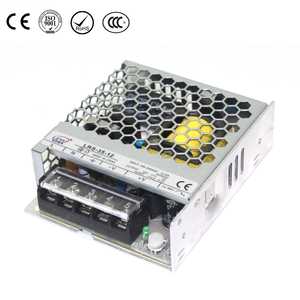
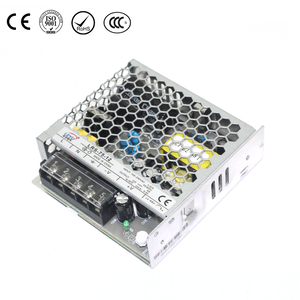
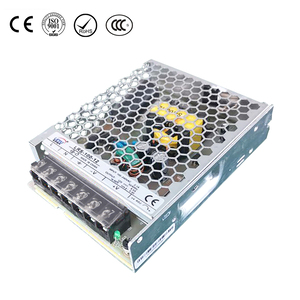
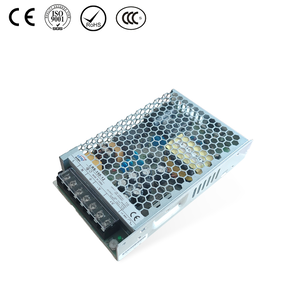
– AC/DC: RSP series, LRS series, NES series (25W–600W+)
– DC/DC: SD series (25W–350W, 1500VAC isolation),DDR series
LEYU AC/DC utilizes high-frequency switching technology with a fixed frequency of 50 kHz; high-end models achieve efficiency as high as 98.5%.
⚡ Common configuration in real-world systems: AC input → AC/DC module → DC bus → DC/DC module → load
AC Input (Mains/Grid) → Select LEYU AC/DC (RSP series, LRS series, NES series)
DC Input (Battery/DC Bus/PV) → Select LEYU DC/DC (SD,DDR Series)
All LEYU products are CE, RoHS, and CCC certified and support OEM/ODM customization.
Q:What is the difference between AC/DC and DC/DC power supplies?
A:AC/DC power supplies convert alternating current (AC) from the grid into direct current (DC). DC/DC converters convert one DC voltage to another DC voltage. The main difference is the input type: AC versus DC.
Q:How do I choose between an AC/DC and a DC/DC converter?
A:Check your power source. If you have an AC mains supply (wall outlet, industrial grid), choose an AC/DC converter. If you already have a DC source (battery, DC bus, solar), choose a DC/DC converter.
Q:Do LEYU power supplies have isolation and protection features?
A:Yes. LEYU SD series DC/DC converters provide 1500VAC input-output isolation, and both AC/DC and DC/DC series include short circuit, overload, overvoltage, and overtemperature protection.
Q:How long do LEYU switching power supplies last?
A:LEYU power supplies are designed for long service life with high-quality components and full protection features. SD series DC/DC converters come with a 2-year warranty; most AC/DC models also include extended reliability testing.

E-mail:
sales@leyuelec.com
service hotline:
+86-577-62998958
+86-18906669219