


-134213.jpg)
How to Choose the Right Switching Power Supply for Your Application
Date:2026-08-30 02:05:18 Visit:225
What Is a Switching Power Supply?
A switching power supply converts input electrical energy by rapidly turning a high-frequency switching transistor on and off, effectively “chopping” the input power. Unlike linear power supplies, switching power supplies achieve typical efficiencies above 80% (often exceeding 90%), are compact and lightweight, and are used in the vast majority of modern electronic devices.
Step 1: Determine Your Input Voltage
The first step is to understand your input power source.
AC Input
If your application connects to the mains grid, consider the AC voltage available in your region. Common specifications include 110V, 220V, and universal input (85–264VAC). A universal input range of 85–264VAC is highly recommended for global compatibility, ensuring reliable operation across different countries and grid conditions.
DC Input
For battery-powered or DC-bus applications, ensure the power supply accepts the specific DC voltage range your system provides. Some models offer both AC and DC input—for example, LEYU’s ZDR5 series supports 100–240VAC or 127–370VDC input.
Key Questions to Ask:
Is your input source AC or DC?
What is the nominal voltage and its allowable fluctuation range?
Will the power supply need to handle voltage surges or brownouts?
Is power factor correction (PFC) required for AC input above 75W?
Step 2: Match Output Voltage to Your Load
The output voltage must match the voltage required by your device. Common output voltages include 3.3V, 5V, 9V, 12V, 15V, 24V, 36V, and 48V.
Select a power supply with the exact voltage your load requires, or one that offers a voltage adjustment range for fine-tuning. For example, LEYU’s NDR series provides models with 12V, 24V, and 48V outputs.
Also pay attention to output voltage tolerance, load regulation, and line regulation—especially for sensitive analog or digital circuits. These specifications indicate how much the output voltage varies with load and input changes.
Step 3: Calculate Output Current and Power
The rated output current and power must exceed your device’s maximum demand.
The 20–30% Margin Rule
Industry best practice recommends selecting a power supply with at least 20–30% more power than your system actually needs. For example, if your system requires 100W, choose a power supply rated for 130W or more. This margin:
- Improves long-term reliability
- Accommodates startup surges and peak loads
- Extends component lifespan by reducing thermal stress
Calculating Power
Power (W) = Voltage (V) × Current (A). If your load requires 24V at 5A, you need at least 120W of output power, and ideally 150W or more with the margin applied.
For applications with pulsed or intermittent loads, also check the peak current capability and overload behavior of the supply.
Step 4: Evaluate Efficiency
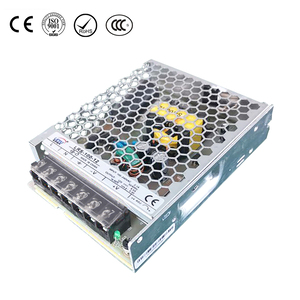
For example, LEYU's LRS-350 power supply boasts an efficiency exceeding 88%, minimizing energy loss and heat generation during operation.
Step 5: Check Ripple, Noise, and Power Factor
Ripple and Noise
- Output ripple and noise refer to the residual AC components superimposed on the DC output. For sensitive analog circuits, sensors, or communication equipment, ripple and noise levels should generally remain below 1% of the output voltage (e.g., less than 120mV for a 12V output). Be sure to verify these specifications at full load and across the entire operating temperature range.
Power Factor Correction (PFC)
- Power Factor Correction is typically required for AC/DC power supplies with a power rating exceeding 75W. PFC reduces harmonic distortion and improves the power factor to near unity, which is particularly important in industrial and commercial applications.
Hold-up Time
- If the system requires continued operation during brief AC power interruptions, check the hold-up time—typically 10–20ms at full load. If a longer hold-up time is required, larger input capacitors or a specialized design may be necessary.
Step 6: Consider Protection Features
Protection Type Function
Short Circuit Protection (SCP)
- Shuts down or limits output during a short circuit
Overload Protection (OLP)
- Prevents damage from excessive current draw
Over Voltage Protection (OVP)
- Protects load from output voltage exceeding safe limits
Over Temperature Protection (OTP)
- Shuts down if internal temperature exceeds safe threshold
These protections are especially critical in industrial environments where power fluctuations and fault conditions are common.
Step 7 Choose the Right Installation Method
Switching power supplies come in several mounting configurations. Your choice depends on enclosure, space constraints, and maintenance requirements.
Mounting Type
DIN Rail Mount
- For Control cabinets, industrial panels, modular systems
- LEYU NDR, EDR, HDR, MDR, series
Chassis Mount
- For Equipment with dedicated mounting space
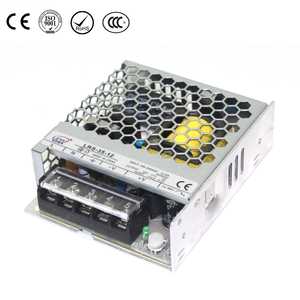
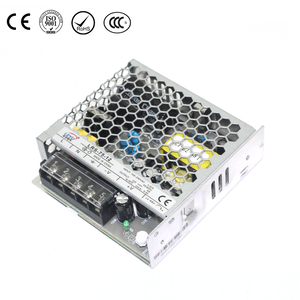
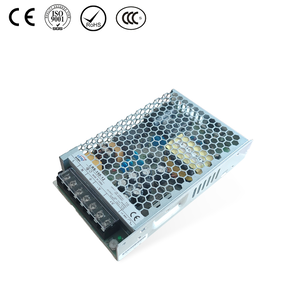
- LEYU LRS, RSP series
Open-frame designs PCB Mount
- For Embedded systems, compact devices Board-mounted power modules
- LEYU PS, EPS series
DIN rail mounting is particularly popular in industrial automation because it allows tool-free installation. Simply clip the power supply onto a standard 35mm rail.
Step 8: Assess Your Application Environment
The operating environment significantly impacts power supply selection and performance.
Harsh Environments
For outdoor, high-humidity, dusty, or corrosive environments, select industrial-grade models with higher IP ratings, fanless designs, or conformal coating. Fanless power supplies eliminate the risk of fan failure and reduce dust ingress, making them ideal for 24/7 operations.Temperature
Temperature is the primary factor affecting the service life of a power supply.Depending on the specific model, derating typically begins between 40°C and 55°C; by the time the temperature reaches approximately 70°C, output power may drop to 50% of the rated value.It is essential to consult the derating curve based on the expected operating temperature and select a power supply with appropriate specifications accordingly.
Application-Specific Requirements
Industrial automation
- Reliability, wide temperature range, EMI compliance
LED lighting
- High efficiency, inrush current handling
Medical equipment
- Low leakage current, medical safety certifications (IEC60601)
Telecommunications
- Wide input range, high MTBF, redundancy options
Step 9: Verify Safety Certifications and EMC Compliance
Ensure your chosen power supply meets relevant safety and EMC standards for your region and industry:
CE
- marking European market (self-declaration of conformity)
UL
- North American market
CCC
- Chinese market
RoHS
- Environmental compliance
IEC/EN
- International standards
EN55032 / EN55024
- EMC emissions and immunity
IEC61000-3-2
- Harmonic current emissions
Summary Checklist
Before finalizing your switching power supply selection, run through this checklist:
- Input voltage range matches your power source
- Power factor correction (PFC) is included if required
- Output voltage matches your load requirement
- Output current/power exceeds load by 20–30%
- Ripple and noise meet your circuit’s sensitivity requirements
- Efficiency meets your thermal and energy goals
- Protection features cover your fault scenarios
- Mounting type fits your enclosure and space
- Operating environment (temperature, humidity, dust) is within derated specs
- Safety certifications and EMC compliance align with your target markets
- Manufacturer offers reliable technical support and warranty
Need help selecting the right power supply?
Choosing the right switching power supply is actually simple. With over twenty years of manufacturing experience, LEYU Electric offers a comprehensive range of AC/DC power supplies, DIN-rail power supplies, and DC/DC converters. Our products are CE certified, RoHS compliant, and CCC certified, serving customers in over 50 countries worldwide. Backed by robust OEM/ODM customization capabilities, we are your trusted partner for reliable power supply solutions.Consult a power supply expert today. Visit leyuelec.com or email sales@leyuelec.com to receive professional product recommendations tailored to your specific application.
