


-134213.jpg)
Pure sine wave inverters: providing clean electricity for modern life
Date:2026-05-06 03:05:46 Visit:428
What is a pure sine wave inverter?
A pure sine wave inverter is a power electronic device that converts direct current (DC) to alternating current (AC). Its output waveform is smooth and continuous, essentially identical to the AC waveform of the mains power grid. This high-quality power output enables pure sine wave inverters to provide stable power to various electronic devices, and is particularly suitable for precision or high-power appliances such as laptops, refrigerators, and air conditioners.
In contrast, there is the modified wave inverter. The modified wave inverter outputs a stepped waveform, which is an approximation of a pure sine wave. Although the cost of the modified wave inverter may be lower, the waveform is not continuous enough, which may cause some equipment to malfunction, reduce efficiency, or even produce a buzzing sound.
Why are pure sine wave inverters worth paying attention to?
The value of a pure sine wave inverter is reflected in several aspects:
1.Protecting Sensitive Electronic Devices: Laptops, televisions, Wi-Fi routers, and some medical devices commonly found in modern homes have certain requirements for power quality. The stable power provided by a pure sine wave inverter helps reduce the risk of equipment overheating, system crashes, and long-term damage to internal components.
2.Improving equipment operating efficiency and quietness: When driving appliances containing motors, such as refrigerators, fans, and microwave ovens, modified wave inverters can sometimes cause the appliances to hum and reduce operating efficiency. The smooth power output of a pure sine wave inverter allows these appliances to operate closer to their design specifications with relatively lower noise.
3.As a backup power source: During power outages, pure sine wave inverters can support the stable operation of critical medical equipment such as lighting systems, communication equipment, and CPAP ventilators, helping to reduce the inconvenience caused by power interruptions.
4.Wider compatibility: Many devices with motors, compressors, or digital timers (such as washing machines, coffee makers, and certain power tools) may not function properly under modified wave conditions. Pure sine wave inverters are compatible with a wider range of appliances, meeting more diverse power needs.
5.Potentially extends equipment lifespan: Harmonics and voltage fluctuations in the corrected wave can cause some internal components of electrical appliances to overheat or age prematurely. Pure sine wave inverters, by providing cleaner power, can mitigate these risks to some extent, helping household appliances and precision equipment maintain a longer lifespan.
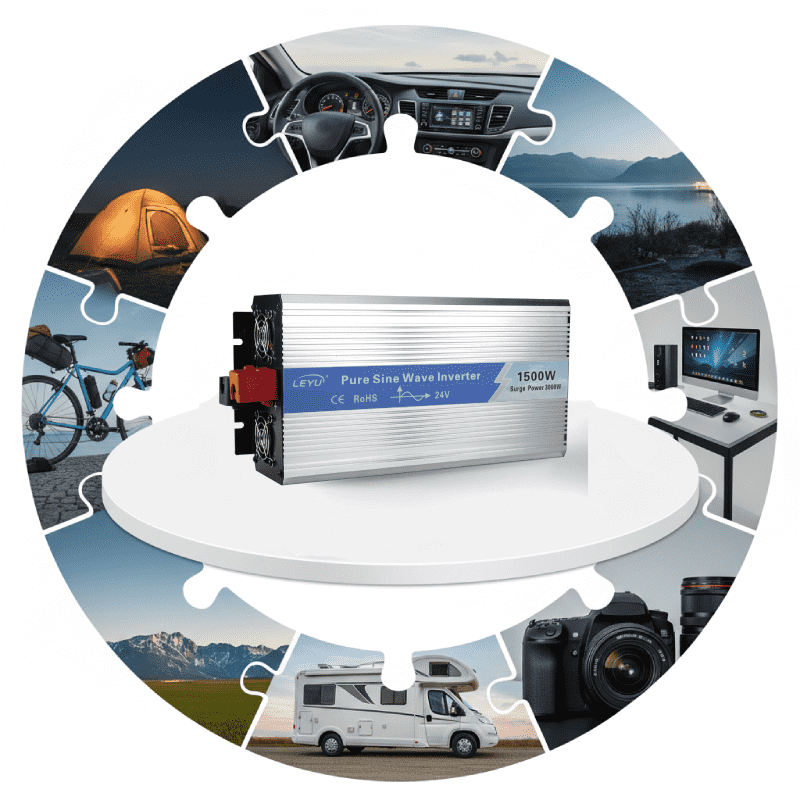
How does a pure sine wave inverter work?
The working principle of a pure sine wave inverter generally includes the following steps:
DC Input: The inverter connects to a DC power source, such as a battery or solar panel.
Pulse Width Modulation (PWM): The internal control circuitry converts the DC power into a high-frequency square-wave AC signal using high-frequency switching devices (such as MOSFETs or IGBTs). This process rapidly switches the DC power on and off at a rate of tens of thousands of times per second, generating an adjustable pulse-width modulated wave.
Filtering and Shaping: The high-frequency square-wave signal then passes through a filter composed of inductors and capacitors. The filter smooths the stepped edges of the square wave, converting it into a smooth, continuous sinusoidal AC power, ultimately outputting power with a waveform similar to the mains voltage.
How to choose between modified wave and pure wave as needed?
Pure sine wave inverters offer numerous advantages, but they are not necessary for all scenarios. For basic needs such as lighting light bulbs, powering simple kitchen appliances, or charging mobile phones, the relatively lower-cost modified wave inverter may suffice. If budget is limited and the devices being driven are not sensitive to power quality, a modified wave inverter can still be considered as an alternative.
