


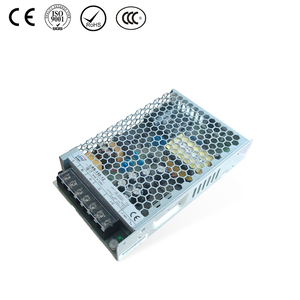
Industrial Power Supply Replacement: 8 Checks Before Choosing a Compatible Substitute
Date:2026-11-11 01:42:19 Visit:35
Replacing an industrial power supply is not always as simple as finding another unit with the same output voltage and wattage.
A power supply may need replacement because the original model has failed, become discontinued, experienced repeated supply interruptions, or no longer meets the requirements of an upgraded machine. In each situation, choosing an unsuitable substitute can lead to wiring changes, installation difficulties, unstable operation, or unexpected downtime.
For maintenance engineers, equipment manufacturers, and industrial buyers, the key question is not simply whether a replacement power supply has similar specifications. It is whether the new unit is electrically, mechanically, and operationally compatible with the existing equipment.
This guide explains eight important checks to complete before selecting a replacement industrial switching power supply.
1. Identify the Original Power Supply Model
Before searching for a replacement, identify the original power supply as accurately as possible.
Start by checking the product label, nameplate, or original datasheet. Record the following information:
-
Manufacturer and model number
-
Input voltage and frequency
-
Output voltage and rated current
-
Rated output power
-
Product dimensions
-
Mounting type
-
Terminal layout and wiring information
-
Relevant environmental and safety specifications
If the original model is discontinued or the datasheet is unavailable, take clear photographs of the product label, terminals, and installation position.
Do not rely only on the product's appearance. Two power supplies may look similar but have different electrical specifications, terminal assignments, or installation requirements.
Practical tip: Keep the original model number and nameplate photograph together when contacting a supplier. These details can help narrow down potential replacement models.
2. Check Input Voltage Compatibility
The input specification is one of the first parameters to verify.
A replacement power supply must be suitable for the actual power source used by the equipment.
Check:
-
AC input or DC input
-
Rated input voltage
-
Allowable input voltage range
-
Input frequency, where applicable
-
Whether the installation uses single-phase or another supported input configuration
For example, an existing unit designed for AC input should not automatically be replaced with a DC-input model simply because both products have the same output voltage.
Likewise, a replacement with a narrower input voltage range may not operate reliably in an installation where the supply voltage fluctuates.
For equipment supplied from different electrical systems or regions, confirm the actual input conditions rather than assuming that the nominal voltage tells the whole story.
3. Match Output Voltage, Current, and Power
Output compatibility requires more than matching the voltage printed on the original product label.
Check three key parameters:
Output voltage
The replacement should provide the voltage required by the connected equipment. An incorrect output voltage can cause malfunction or damage.
Rated output current
The available output current must be sufficient for the actual load. A replacement with a lower current rating may be unsuitable even when its output voltage is identical.
Rated output power
Confirm that the replacement can support the equipment's total power demand under the actual operating conditions.
For a single-output power supply, rated output power is generally calculated as:
Power (W) = Output Voltage (V) × Output Current (A)
For example, a 24V power supply rated at 5A provides a nominal output power of 120W.
However, a 120W rating alone does not establish compatibility. Startup demand, load characteristics, operating temperature, and derating requirements must also be considered.
Important: A higher-rated replacement is not automatically suitable. Verify voltage regulation, current behavior, load requirements, and the equipment manufacturer's specifications before making a change.
What if the original power supply has multiple outputs?
For multi-output power supplies, check every output channel separately.
Compare:
-
Voltage of each output
-
Rated current of each output
-
Total combined output power
-
Load distribution requirements
-
Any specified cross-regulation or minimum-load conditions
Matching only the main output may leave other connected circuits without the correct supply.
4. Verify Terminal Layout and Wiring Compatibility
Electrical connections are a frequent source of replacement problems.
Even when two power supplies have similar ratings, their terminal arrangements may differ.
Before installation, verify:
-
Input terminal assignments
-
Positive and negative output polarity
-
Protective earth connection
-
Terminal positions and spacing
-
Connector type, where applicable
-
Wiring requirements specified by the manufacturer
Never assume that terminals in the same physical position have the same electrical function.
A replacement may require wiring changes even if its enclosure dimensions are similar to the original unit.
For multi-output products, verify the wiring and polarity of every output.
Safety reminder: Disconnect power before working on electrical connections. Installation and wiring changes should be performed by qualified personnel according to applicable electrical safety requirements.
5. Compare Dimensions and Mounting Requirements
Mechanical compatibility matters, particularly when replacing a power supply inside an existing control cabinet or machine.
Measure the original unit and check:
-
Overall length, width, and height
-
Mounting hole positions
-
DIN rail or other mounting method
-
Required installation clearance
-
Terminal access and cable entry space
-
Space needed for maintenance and removal
For DIN rail power supplies, confirm that the mounting system is compatible with the existing rail and that the replacement can be installed securely.
A physically larger unit may interfere with adjacent components or cable routing. A smaller unit may also require a different mounting arrangement.
If avoiding cabinet modification is important, provide the supplier with the original product dimensions and photographs of the installation space.
6. Evaluate Operating Temperature, Ventilation, and Derating
A replacement power supply must operate under the actual environmental conditions of the equipment.
Consider:
-
Ambient operating temperature
-
Cabinet temperature
-
Ventilation and airflow
-
Nearby heat-generating components
-
Installation orientation
-
Required operating clearance
-
Output power derating at elevated temperatures
A power supply's rated output is not necessarily available under every temperature condition.
For example, a unit operating in a hot electrical cabinet may need to deliver less than its nominal rated power, depending on the manufacturer's derating curve.
When comparing replacement models, review the technical datasheets rather than relying only on nominal wattage.
If the original power supply failed repeatedly in a hot or poorly ventilated cabinet, replacing it with another unit of the same nominal rating without examining the thermal conditions may not solve the underlying problem.
7. Check Protection Functions and Applicable Compliance Requirements
Protection functions help determine whether a replacement is appropriate for the equipment and its operating environment.
Depending on the application, check whether the original design requires:
-
Overload protection
-
Overvoltage protection
-
Short-circuit protection
-
Overtemperature protection
Do not assume that every power supply provides the same protection features or uses the same protection behavior.
Also review the compliance requirements relevant to the final equipment and target market.
Depending on the application, these may include applicable electrical safety, EMC, and other regulatory requirements.
When evaluating a replacement, verify the actual product documentation and certification scope. A certificate for one model or product family should not automatically be treated as evidence that every alternative model has the same certification coverage.
8. Validate the Replacement Before Full Deployment
Even when the electrical and mechanical specifications appear compatible, the replacement should be evaluated in the actual equipment or an appropriate test setup before large-scale deployment.
A practical validation process may include:
-
Compare the original and replacement datasheets.
-
Review wiring and terminal assignments.
-
Check installation dimensions and mounting.
-
Verify output voltage under the intended load conditions.
-
Observe startup behavior and equipment operation.
-
Check temperature and ventilation under representative operating conditions.
-
Confirm that the equipment functions as expected throughout the required operating cycle.
The exact validation scope depends on the equipment, application, and consequences of a failure.
For OEMs, machine manufacturers, and buyers managing multiple replacement units, testing a sample before ordering or installing a larger quantity can help reduce compatibility risks.
Do not treat a matching nameplate rating as proof of drop-in compatibility. Final approval should be based on technical review and application-level validation.
How to Request a Compatible Industrial Power Supply Replacement from LEYU
If your original industrial power supply is discontinued, difficult to source, or no longer suitable for your application, the first step is to establish its actual technical requirements.
LEYU Electrical provides switching power supply and inverter products for industrial and power-related applications. For replacement inquiries, buyers can share the original product information so that potential matching options can be reviewed.
To help with an initial assessment, prepare:
-
Original power supply model or nameplate photograph
-
Required input voltage
-
Output voltage, current, and power
-
Product dimensions and mounting requirements
-
Equipment application
-
Environmental operating conditions
-
Required replacement quantity
If the original model is unavailable, photographs of the product label, wiring terminals, and installation position can also be useful.
The suitability of any proposed replacement depends on a technical comparison of the original requirements and the candidate product specifications. A final compatibility decision should be confirmed before installation.
Contact LEYU Electrical to discuss your industrial power supply replacement requirements and potential product options.
