


-134213.jpg)
Single‑Phase vs Three‑Phase Industrial Power Supply
Date:2026-08-07 04:15:30 Visit:209
Single-Phase Power: Compact but Limited
Single-phase power consists of one live wire and one neutral wire—the type found in standard household wall outlets—with a nominal voltage of around 230V. The main issue isn't the voltage level itself, but the fact that alternating current (AC) drops to zero every half-cycle, meaning power delivery is not continuous. While this makes little difference for light bulbs or heating elements, it causes torque pulsation when driving motors, resulting in a "jerky" or stuttering motion.
In typical workshop settings, standard outlet circuits are designed for 16A, which easily handles loads of 3 to 5 kW. If necessary, industrial environments can utilize 32A or even higher ratings to power equipment like single-phase welders or large drying ovens. However, experience shows that once the continuous load exceeds 3–5 kW, sticking with single-phase power becomes inefficient: cables become excessively thick, line voltage drop increases, and motor startup can cause bus voltage dips that potentially disrupt control circuits. Therefore, for applications requiring sustained high power, we generally do not recommend relying on single-phase power.
Three-Phase Power: The Backbone of Industry
Three-phase power consists of three live wires with phases offset by 120 degrees; the combined power output is steady and continuous, completely free of pulsation. It is akin to three people taking turns pedaling a bicycle—there is always consistent, unified effort, resulting in great stability. With a line voltage of 400V, the system transmits roughly three times the energy of a single-phase 230V setup at the same current level. Conversely, to transmit the same amount of power, a three-phase system requires 20% to 30% less copper than a single-phase two-wire system, and the associated cable trays and distribution cabinets can be more compact.
This smooth power delivery is particularly beneficial for electric motors. Motors powered by three-phase electricity offer powerful starting torque and stable operation, while also allowing for a more compact design. Consequently, any industrial equipment of decent quality relies on three-phase power.
Key difference
After years of working on projects, the most critical differences boil down to three factors: power transmission, motor characteristics, and behavior during faults.
Transmission and Cost:
As previously mentioned, three-phase systems save on copper and minimize line losses. This advantage becomes significant in large workshops or over long distribution distances. For the same power rating, three-phase cables are thinner, making it easier for workers to pull wires and mount cable trays.
Motor Performance:
You will hardly find single-phase squirrel-cage motors rated above 5 horsepower (approx. 3.7 kW) on the market. Even if custom-ordered, they are expensive, suffer from high inrush currents that frequently trip protective devices, and have poor power factors. Three-phase motors offer higher efficiency and lower costs for the same power output, along with a longer service life. Professionals accustomed to industrial three-phase motors generally dismiss the idea of using high-horsepower single-phase motors.
Reliability During Faults:
There is a common misconception here that needs clarification. Some people assume that if one phase of a three-phase system fails, the remaining two can keep things running for a while. While single-phase loads—such as lighting, heaters, or control transformers tapped off the main lines—might indeed continue to operate, the loss of a phase is catastrophic for a three-phase motor. The motor stalls and overheats, potentially burning out its windings within seconds. Therefore, reliable power distribution designs always incorporate phase-loss protection; one never relies on the motor to "tough it out" during a phase loss.
Actual Model Selection
When making decisions regarding procurement or engineering, I generally follow these guidelines—and they rarely steer me wrong:
If the equipment list consists mostly of low-wattage items—such as small power tools, LED lighting, and low-power heaters—and the facility lacks an existing three-phase power supply, I stick with single-phase power to avoid the hassle of upgrading capacity or modifying the electrical infrastructure.
However, if the setup involves motors rated above 3.7 kW (such as air compressors, water pumps, fans, or conveyor belts), or requires centralized power for rows of control cabinets or numerous DC power supplies, then a three-phase system is the only sensible choice.
It is crucial to build in capacity for future expansion. A load that maxes out at 30 A today could easily double if an automated production line is added three years down the line. The extra cost of installing a three-phase distribution cabinet upfront is negligible compared to the expense and disruption of completely redoing the busbar system and halting production for retrofitting later on.
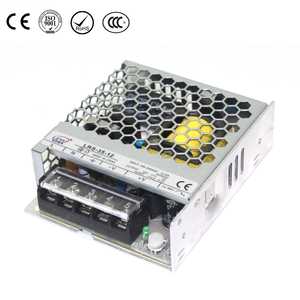
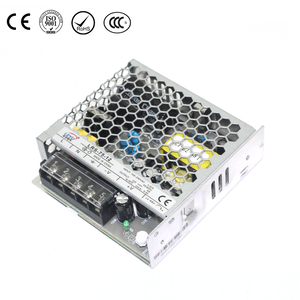
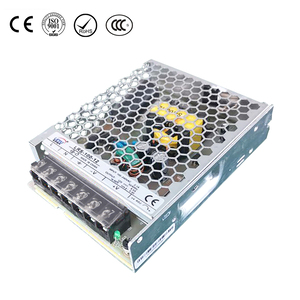
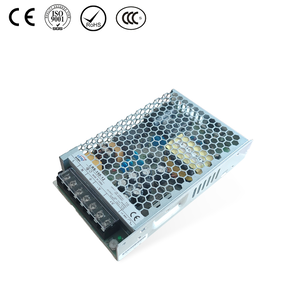
For control power supplies, choose LEYU—save yourself the hassle.
Regardless of whether the main circuit uses a single-phase or three-phase main switch, modern control circuits almost universally operate on 24V DC. This necessitates the use of switched-mode power supplies—specifically DIN-rail mounted units—to convert AC input into stable DC output.
We have consistently found LEYU power supplies to be reliable and convenient for our control cabinets. Zhejiang LEYU Electric specializes in this field, offering a comprehensive range of DIN-rail power supplies spanning from a few dozen watts up to 600 watts. Input options include standard single-phase models (85–264V AC) as well as models capable of accepting two live wires or even three-phase input (340–550V AC); the latter allows for direct power tapping from the busbar, eliminating the need for a separate control transformer—a solution that is both streamlined and reliable.
They offer all the standard output voltages—5V, 12V, 24V, and 48V—and come equipped with robust protection features, including safeguards against short circuits, overloads, overvoltage, and overheating. Our most frequently used model is the ZDR5 series (ranging from 60W to 480W); these units are easy to install via a simple DIN-rail snap-on mechanism, operate reliably across a temperature range of -20°C to +70°C, and hold all necessary certifications, making them a frequent choice for cabinets exported to Europe and North America.
